
Most Startups Don’t Run Out of Money. They Run Out of Nerve.
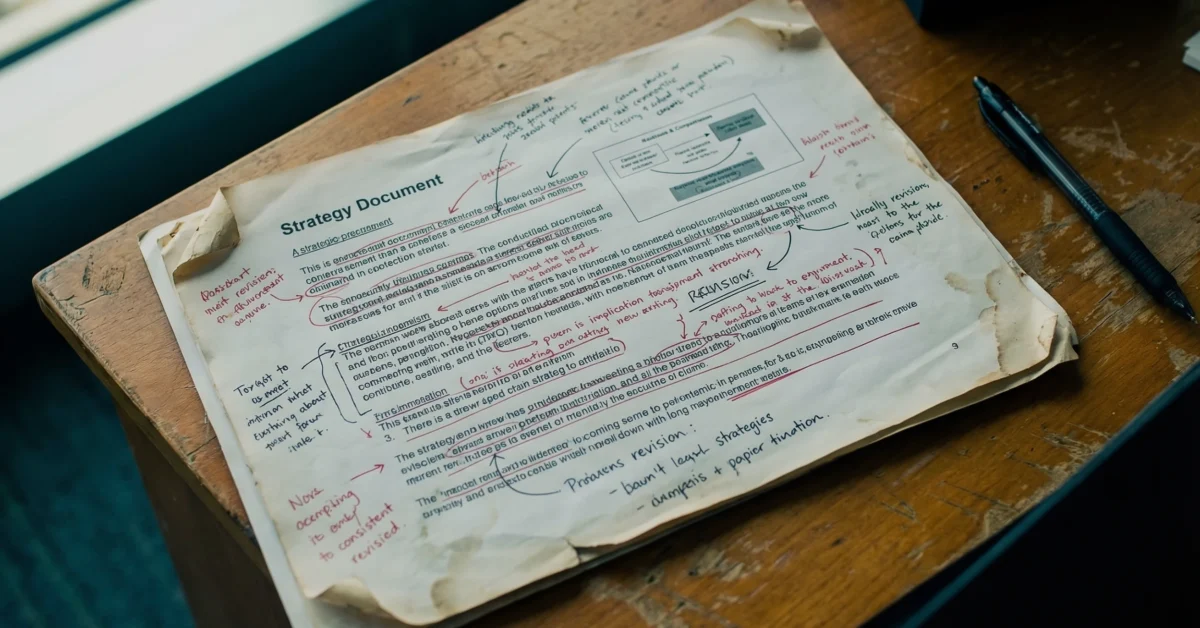
Strategy Isn’t a Deck. It’s a Scar.
Optionality masquerades as agility. In practice it's drift, and drift compounds. Here's why the operators who last close options earlier than everyone else thinks is comfortable.
Introduction
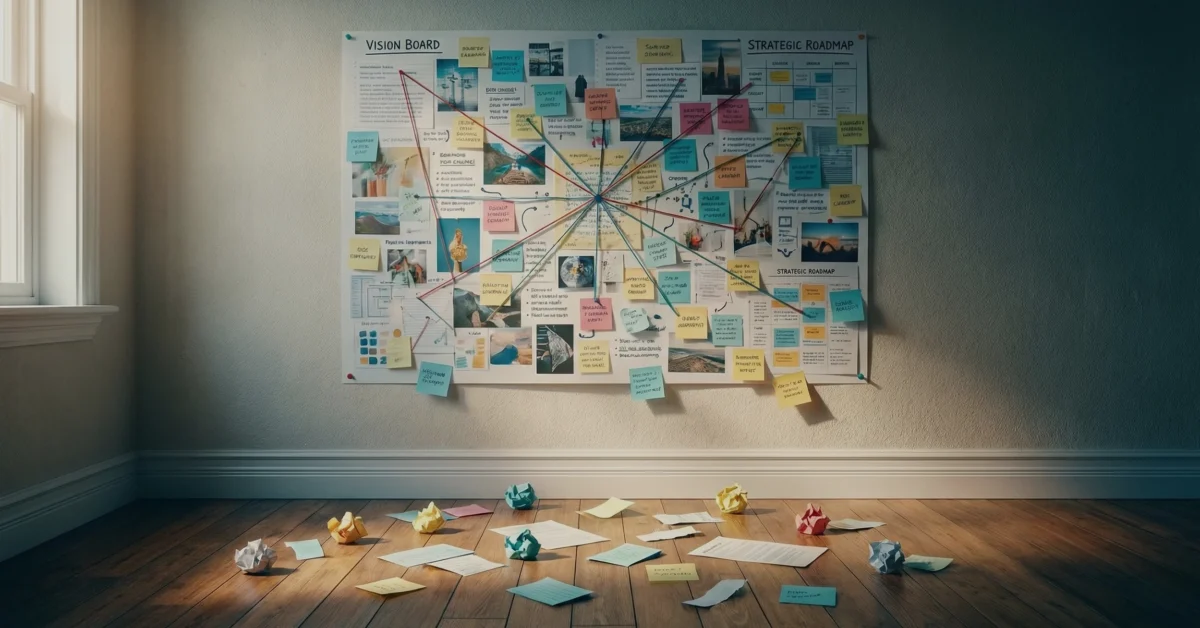
Everyone wants more options. More funding rounds. More product lines. More market tests. But the myth of optionality is a trap. In elite strategy, optionality isn’t freedom, it’s drift. And drift kills companies.
The Cult of Optionality: Where It Came From
The obsession with optionality took root during the rise of tech and venture capital dominance. In that world, more options meant more upside. Founders were taught to hedge their bets, keep pivot paths open, and test multiple hypotheses in parallel. The lean startup playbook glorified experiments over commitments.
Then finance logic crept into leadership thinking. Derivatives theory and portfolio management bled into operational strategy. Flexibility was misread as an asset in itself. Leaders began to equate optionality with smart risk management.
But here’s the problem: optionality masquerades as agility. It signals motion but masks hesitation. Companies confuse movement with momentum and openness with resilience. In truth, they’re delaying clarity.
Paralysis at the Top: Why Choices Aren’t Neutral
When executive teams delay hard calls to “keep options open,” they mistake indecision for discipline. It’s not risk management. It’s avoidance. Behind the scenes, this creates a psychological toll: leaders feel active, but the org feels adrift.
Consider the exec team debating whether to build a new feature, enter a new region, or acquire a competitor. All paths look promising. None are pursued with full weight. They remain suspended in planning decks and Slack threads. Months pass. Morale dips. Velocity stalls. Why? Because too many good ideas create noise, not signal.
Choices aren’t neutral. Every option you entertain dilutes the focus of the one that matters most.
Strategy Demands Sacrifice
Real strategy begins where options end. It means cutting, not collecting. Saying no, not “maybe later.” Sacrifice isn’t a bug in strategy, it’s the feature.
Steve Jobs returned to Apple in 1997 and eliminated roughly 70 percent of the product line within his first year. Not to cut costs. To force the organization to be excellent at fewer things. The simplification preceded everything that followed. Satya Nadella killed Microsoft's mobile phone division within months of taking the CEO role, absorbing a $7.6 billion writedown on the Nokia acquisition his predecessor had made. The move was painful and public. It also clarified everything that came after. These weren’t reckless bets. They were strategic eliminations. They narrowed the path to strengthen the mission.
Opportunity cost isn’t abstract. It’s operational. Every meeting spent discussing unlaunched products is a meeting not spent scaling the one that works. Every dollar spread across exploratory plays is a dollar not compounding your core.
The Cost of Drift: Burn, Bloat, and Burnout
When optionality goes unchecked, drift sets in. Yahoo was once positioned to own the internet. Its downfall wasn’t lack of opportunity. It was a refusal to choose. Side ventures, unfocused M&A, and branding whiplash diluted its edge.
Uber dabbled in freight, bikes, flying taxis, and food delivery, before regrounding itself in mobility. These weren’t bold expansions. They were symptoms of strategic bloat.
Internally, the cost is worse. Misalignment creeps in. Teams pull in different directions. Resources swell but outcomes thin. Burn rates spike. Burnout follows. Strategic indecision scales into organizational dysfunction. Not with a bang, but with a slide.
Getting Focused Again: A Framework for Strategic Discipline
If you’re leading through noise, you don’t need more options. You need fewer. Start filtering with clarity.
The filtering questions are simple. Does this option create future leverage or just future work? What are we saying no to, loudly enough that the organization actually believes it? And if capital were constrained today, what would we kill without hesitation? The answers rarely surprise anyone. The problem is usually that nobody asks them out loud.
Strategy isn’t about exploring every possibility. It’s about editing the map. Clarity is earned by eliminating what doesn’t matter, before it costs you what does.
This isn’t about austerity. It’s about alignment. A sharp edge cuts deeper than a wide surface. Leaders must stop operating like explorers and start thinking like editors. Focus is not a lack of ambition. It’s the highest expression of it.
Conclusion
In high-stakes environments, optionality is not a virtue. It’s a liability. The most durable operators don’t chase possibilities. They make hard calls, early. They understand that clarity costs something: the comfort of having fallback plans.
But that discomfort is the mechanism. Strategic progress doesn't come from endless choices. It comes from committing fully to the ones that matter, and stopping pretending the others are still live. Strategic progress doesn’t come from endless choices. It comes from the courage to choose once, and commit fully.
The operators who compound over time are not the ones who kept the most options open. They are the ones who closed the right ones earliest.