Strategy Isn’t a Deck. It’s a Scar.
Vision inspires. It also clouds judgment under pressure and misallocates capital when left unchallenged. Here's where strategy actually starts and why it isn't the same thing.
Introduction
Vision photographs well. It raises capital, attracts talent, earns media. What it doesn't do is help you choose when the launch falters and the capital tightens. That's when the difference between vision and strategy stops being theoretical and starts being expensive.
The Cult of Vision
Vision has become startup dogma. Silicon Valley canonized it as the first and final requirement for leadership. The bigger the vision, the more serious the founder. It’s how you raise capital, attract talent, and earn media. But what was once a directional tool has morphed into a personality cult.
Quibi raised $1.75 billion on the vision of premium short-form mobile content. The vision was coherent, the timing felt right, and the founder credentials were impeccable. The strategy, specifically how people actually watch video on phones, in stolen moments rather than dedicated sessions, was never stress-tested against reality. It shut down after six months. Lernout & Hauspie spent years positioning itself as the future of speech recognition technology, attracting investment from Microsoft and Intel on the strength of a vision that felt inevitable. The underlying revenue figures were fabricated. The vision was so compelling that even sophisticated institutional investors stopped asking whether the business actually worked.
When you conflate vision with competence, you mistake aspiration for execution. In high-noise environments, this is lethal.
Vision Is Not a Compass. It’s a Mirage
A well-worded vision can feel like strategic direction. But it isn’t. Vision is inert until it meets friction. Until then, it’s comfort in disguise. The more elegant the story, the easier it is to mistake for inevitability.
Many leaders double down on vision precisely when it starts breaking. They ignore real-time signals (burn rate, churn, team fatigue) in service of a narrative they no longer control. This is the psychological trap: sunk cost meets savior complex. You don’t want to adjust. You want to be right.
Strategy doesn’t care about your narrative. Reality doesn’t either.
Strategy Lives Where Vision Breaks
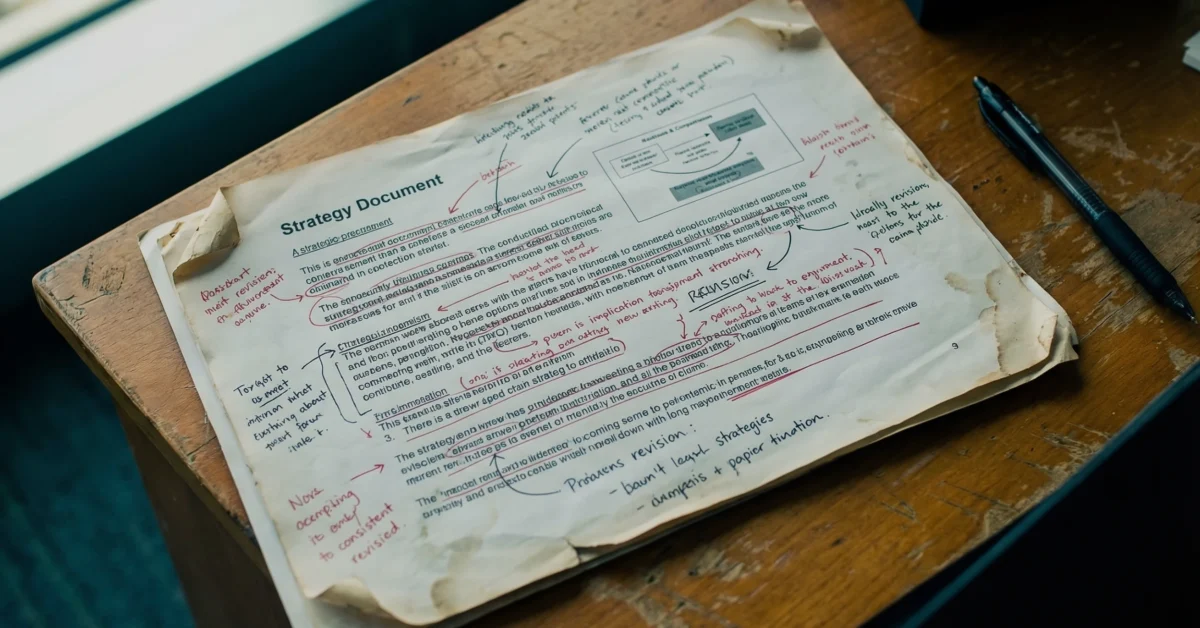
Strategy is not the polished idea, it's what survives first contact with the market. Shopify's decision to exit logistics after building it out is the clearest recent example. The vision pointed one direction. The market terrain pointed another. Pulling back wasn't failure. It was strategy correcting the overreach of vision. That correction is only possible if you're willing to read the terrain honestly rather than defend the map.
The Operator’s Litmus Test
Before you elevate an idea to strategic status, pressure-test it. Not with enthusiasm, but with constraint.
The pressure test is straightforward. Can this be resourced without optimistic assumptions? Who gets hurt if it fails, financially, operationally, reputationally? What does the data say when you strip out the confirmation bias the vision has been generating? Are you optimizing for applause or outcomes? And the hardest one: if this weren't your idea, would you still back it? The last question is the one most operators skip. It's also the one that answers the others.
Reclaiming Strategy in a Vision-Obsessed World
In environments intoxicated by storytelling, you need a different anchor. Shift from narrative construction to scenario planning. Instead of pitching a perfect future, define multiple probable ones, and how you’ll move within them.
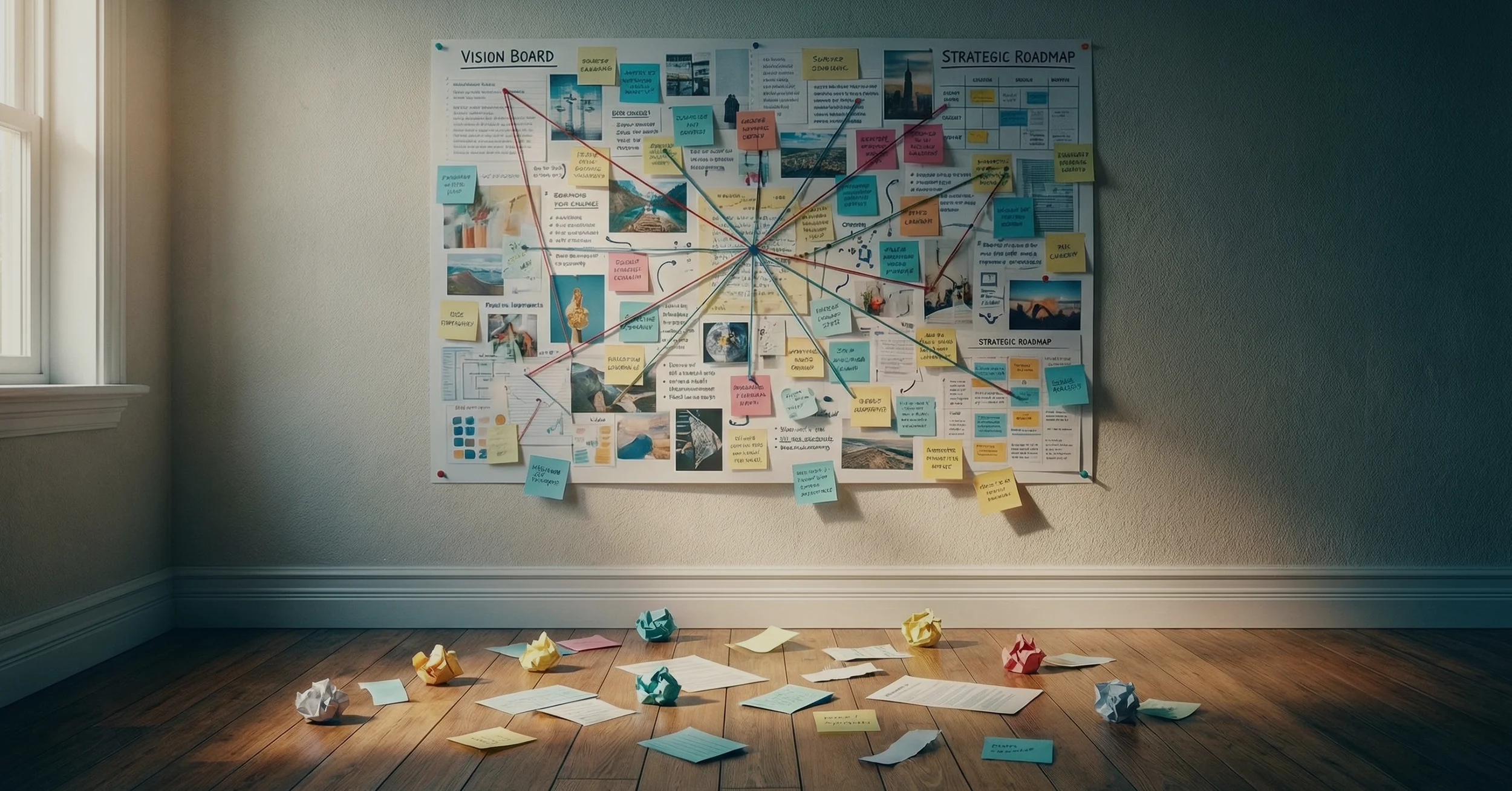
Vision says, “Here’s what the world could become.” Strategy asks, “What will we do when it doesn’t?” One is theatrical. The other is grounded.
Build strategies that eat vision for breakfast. That invite contradiction. That expect terrain to shift. In calm rooms, let tension live longer than comfort. That’s where real strategy is born.
Conclusion
Vision has its place. It can orient, inspire, and attract. But left unchallenged, it becomes a liability, a mirage that misguides, a comfort that costs. Real strategy is forged not in clean narratives, but in messy constraints.
In a culture that rewards spectacle, choose substance. Vision has its place. It orients. It attracts. But left unchallenged it becomes the most expensive comfort in the building. Strategy is what you have when the vision stops being enough and the terrain starts being honest.